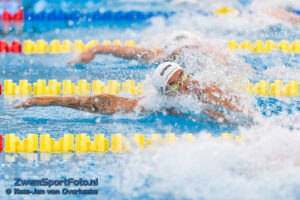
During the European Swimming Trials 2026, Dutch swimmers will also compete for the Dutch Long Course Championships titles.
International swimmers are welcome to compete in this open championship, while Dutch athletes race for national titles in the Open category and Junior categories.
About the Dutch Nationals
The European Swimming Trials function as an Open Dutch Championship.
This means:
- Swimmers from all countries may participate.
- Finals will have reserved spots for Dutch athletes.
- Finals include the fastest swimmers regardless of nationality.
- Dutch Championship titles are awarded to the best Dutch athletes.
The format ensures strong international competition while maintaining the official national championship standings.
Championship Categories
The Dutch Championships include 6 main categories:
Press the catogories to see more information
Open Category
In the Open category, Dutch swimmers compete for national titles during the A-finals.
The highest ranked Dutch swimmer in the A-final of each event is crowned Dutch Champion.
Under 18 & under 20
Junior rankings are determined based on the results from the heats (morning sessions).
This means:
- Junior swimmers compete in the same heats as all other athletes.
- The eight fastest entered swimmers in the O18 category will be seeded in the second-to-last heat.
- The eight fastest entered swimmers in the O20 category will be seeded in the last heat.
- Separate junior rankings are created from the heat results.
- The fastest Dutch juniors are awarded the Junior Dutch Championship titles.
This structure allows junior athletes to compete within the same international field while still competing for national junior titles.
Paralympic swimmers
Para swimmers compete alongside the able-bodied events during the European Swimming Trials, with their own Para finals and championship rankings.
Heats
Para swimmers participate in the morning heats, where they are seeded based on their entry times, just like other athletes. There are no separate heats specifically for para events.
Para Finals
During the finals session, the top 10 para swimmers based on para points from the heats qualify for the para final.
- Qualification for the final is determined by para points.
- Lane assignments in the para final are based on the swim times achieved in the heats.
Para youth Categories
Para youth titles are awarded in two age groups:
- O16
- O18
These youth titles are determined from the results in the heats. There are no separate youth heats; all swimmers compete together and the youth rankings are extracted from the heat results.
Para points system
Results in para swimming are calculated using the Para points system, which allows swimmers from different classifications to compete against each other. The swimmer with the highest number of Para points achieves the best ranking.
More about para swimming
The para points system
In para swimming, athletes from different classifications can compete in the same race. Because each classification represents a different level or type of impairment, results are compared using the para points system.
The para points system converts a swimmer’s race time into a points score based on the world record for that classification and event. This makes it possible to fairly compare performances between swimmers from different classes.
How it works:
- Each classification and event has a reference time based on the world record.
- A swimmer’s race time is compared to that reference time.
- The closer the performance is to the world record for that class, the higher the number of para points awarded.
A faster time does not always result in more points if another swimmer performs closer to the world record in their classification.
Example
A swimmer in class S6 may swim a slower race time than a swimmer in class S10, but if their performance is closer to the world record for the S6 class, they may receive more Para points and therefore rank higher in the results.
Para Swimming Classifications
Para swimming uses an international classification system that allows athletes with different types of impairments to compete fairly. Each swimmer is assigned a sport class based on how their impairment affects their ability to perform the swimming strokes.
A classification consists of a letter and a number.
The letter indicates the stroke group:
- S – freestyle, backstroke and butterfly
- SB – breaststroke
- SM – individual medley
Because breaststroke requires a different movement pattern, swimmers may have a different class number for breaststroke than for the other strokes.
The number indicates the level of functional ability in the water. In general, lower numbers represent a greater activity limitation, while higher numbers represent less limitation.
Physical impairment (S1–S10)
Classes S1 to S10 are used for swimmers with a physical impairment that affects movement, coordination or limb function. This can include limb deficiency, spinal cord injury, cerebral palsy or restricted joint movement.
Swimmers in the lower classes, such as S1 to S3, have the most significant physical limitations in the water, while swimmers in classes closer to S10 have minimal physical limitations.
Visual impairment (S11–S13)
Classes S11 to S13 are used for swimmers with a visual impairment.
- S11 swimmers have very little or no vision and must wear blackened goggles during races to ensure equal conditions. They may also use a tapper, a person who signals when the swimmer is approaching the wall.
- S12 swimmers have a severe visual impairment but may retain some vision.
- S13 swimmers have the least severe visual impairment within this group.
Intellectual impairment (S14)
Class S14 is used for swimmers with an intellectual impairment. These athletes may experience challenges with aspects such as race pacing, reaction time or complex movement coordination.
During the European Swimming Trials, swimmers from different classifications compete together in the heats. Their performances are then compared using the para points system, which determines qualification for the para finals.

 Arno
Arno